

Inside Alpha · Call summary · 25 August 2026
Why Treasury buybacks are not QE
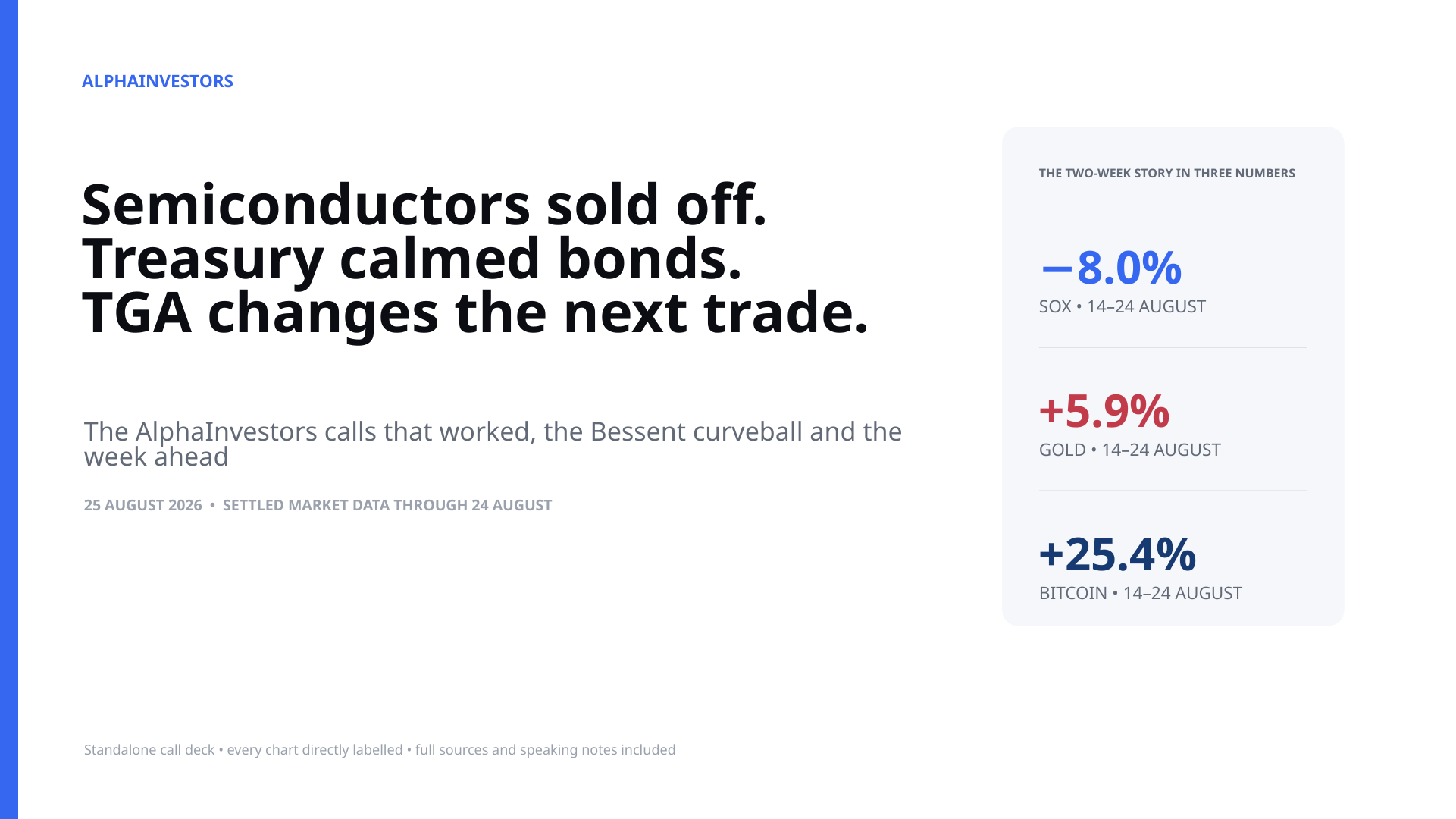
Semiconductors cracked, long yields climbed and Treasury increased its buyback capacity. The material question is whether TGA cash is actually drawn without replenishment.
 Enlarge figure ↗
What broke — and what did not
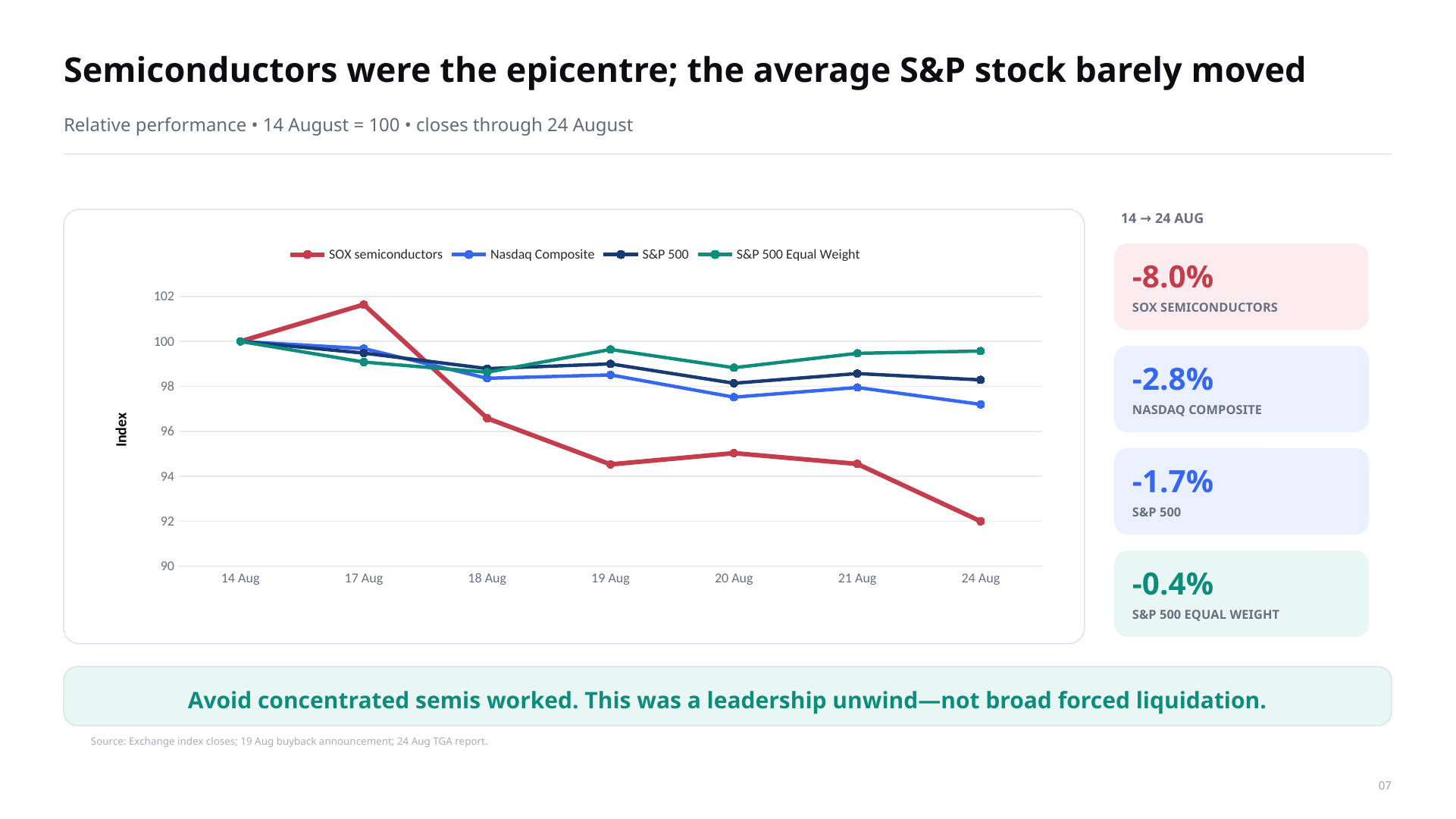
Semiconductors cracked on 18 August, but the damage was concentrated. Across the common 14–24 August window, the SOX semiconductor index fell 8.0%, while the Nasdaq lost 2.8%, the S&P 500 fell 1.7% and the equal-weight S&P was down only 0.4%.
That pattern was a concentrated, crowded leadership unwind rather than broad forced liquidation. Volatility rose without becoming disorderly, high-yield credit remained calm and the average S&P stock did very little. The weakness mattered, but it was not yet contagion.
 Enlarge figure ↗
AI has become a duration question
Large AI and platform companies increasingly behave like duration assets: more of their valuation depends on earnings far in the future, while enormous capital-expenditure programmes absorb cash and create demand for financing. Higher long-dated discount rates therefore matter directly to equity valuations.
AI borrowing also competes with Treasury for the same pool of duration capital. Wider spreads show investors are charging more to absorb that debt; they do not imply an immediate systemic credit crisis or an imminent default by the major platforms.
The buyback increase was a signal, not QE
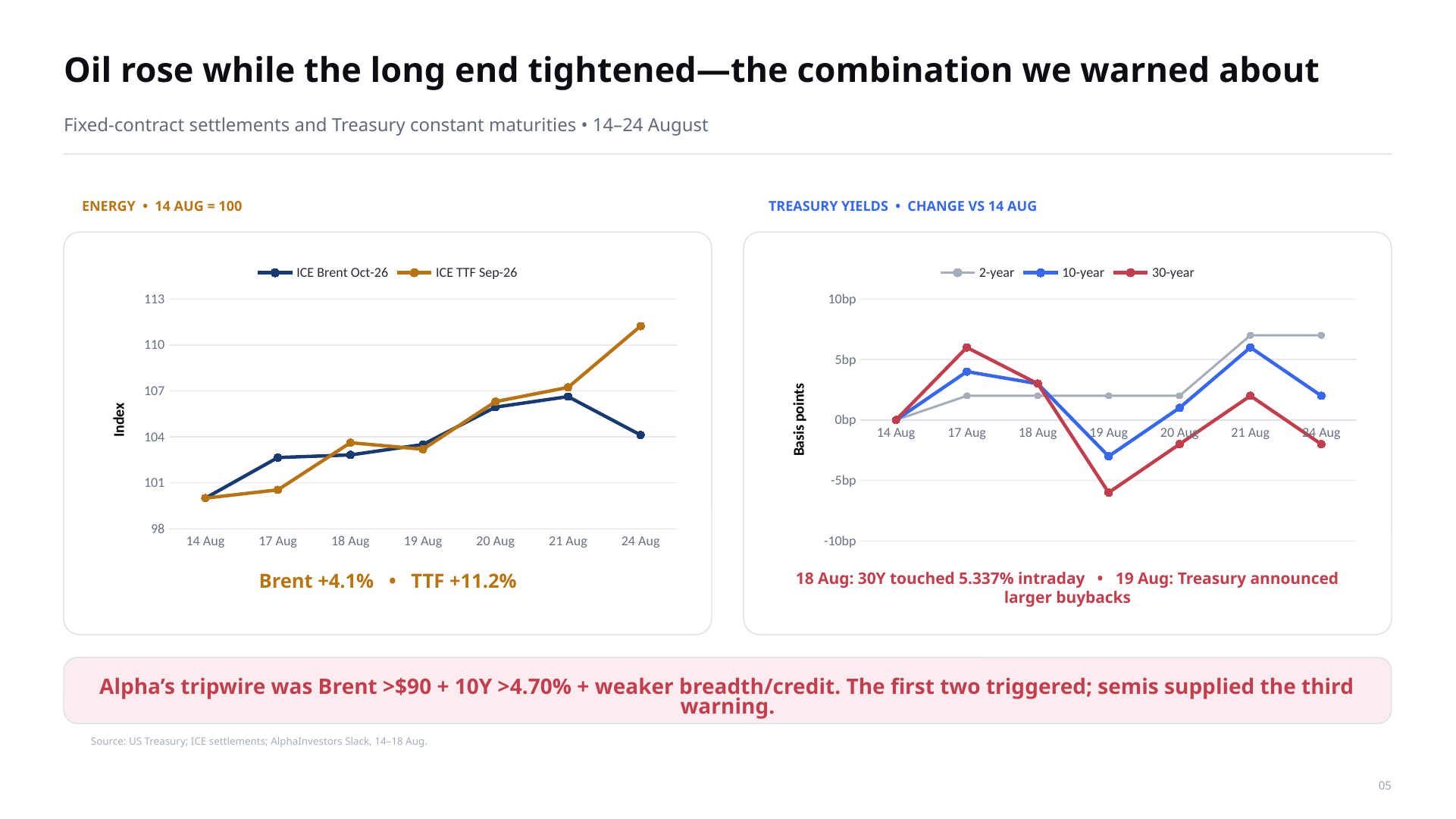
After the 30-year Treasury yield pushed towards 5.30%, Treasury doubled the cap on certain future long-bond buyback operations from $2 billion to at least $4 billion per operation. The additional annual capacity was roughly $14 billion across the tentative schedule — tiny beside US issuance and historic Federal Reserve asset purchases.
No enlarged purchase had taken place. The announcement changed expectations and revealed discomfort with long-end stress, but it was not a yield cap, a response to a failed market or hundreds of billions of central-bank buying. Calling it QE confuses a policy signal with the actual balance-sheet mechanics.
 Enlarge figure ↗
The TGA is the real liquidity test
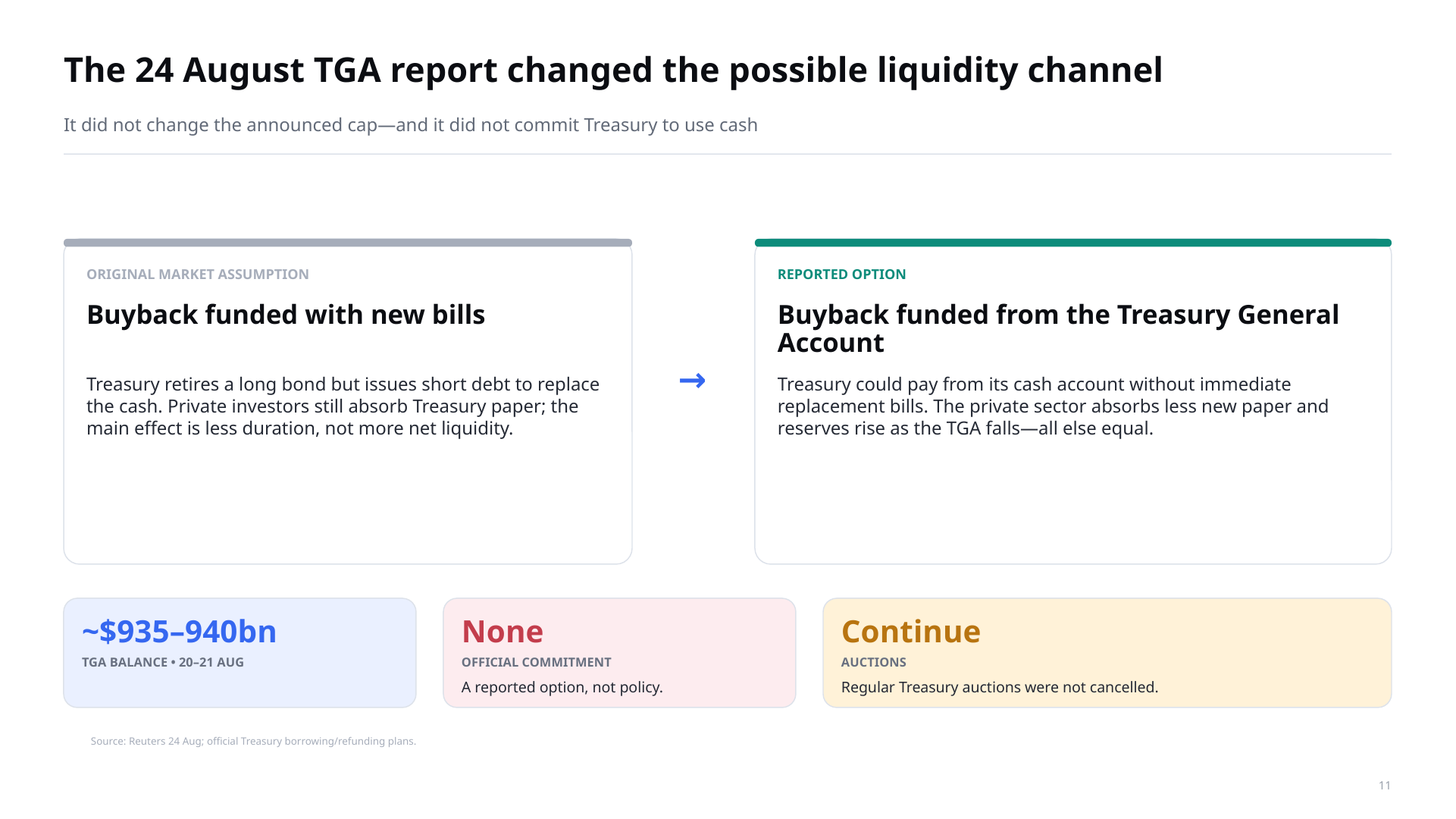
If buybacks are financed by issuing more short-dated bills, private investors exchange long duration for bills but still absorb Treasury paper. That changes the maturity mix and may ease the long end without adding much net liquidity.
An unoffset draw from the Treasury General Account would be different at the margin. Treasury cash would fall, bank reserves would rise and the market would absorb less paper in the near term. That could support risk assets — but it would still not be QE because the Federal Reserve is not buying bonds and its asset holdings do not increase.
The liquidity effect would also be temporary if Treasury later rebuilt the TGA through issuance. The evidence required is observable: the account falling without rapid replenishment, reserves rising, long yields easing and market breadth improving. A report or hint is not enough.
 Enlarge figure ↗
Structural and tactical duration can disagree
The structural view remains that long yields face upward pressure because deficits, inflation risk and competing issuance have not been solved. A tactical duration trade can still make sense when strongly bearish news no longer pushes yields higher.
Those are different horizons, not contradictory opinions. The long-term thesis should not be abandoned because of one price response, but the short-term setup can still be respected and sized separately.
Portfolio posture: keep the hedges, demand confirmation
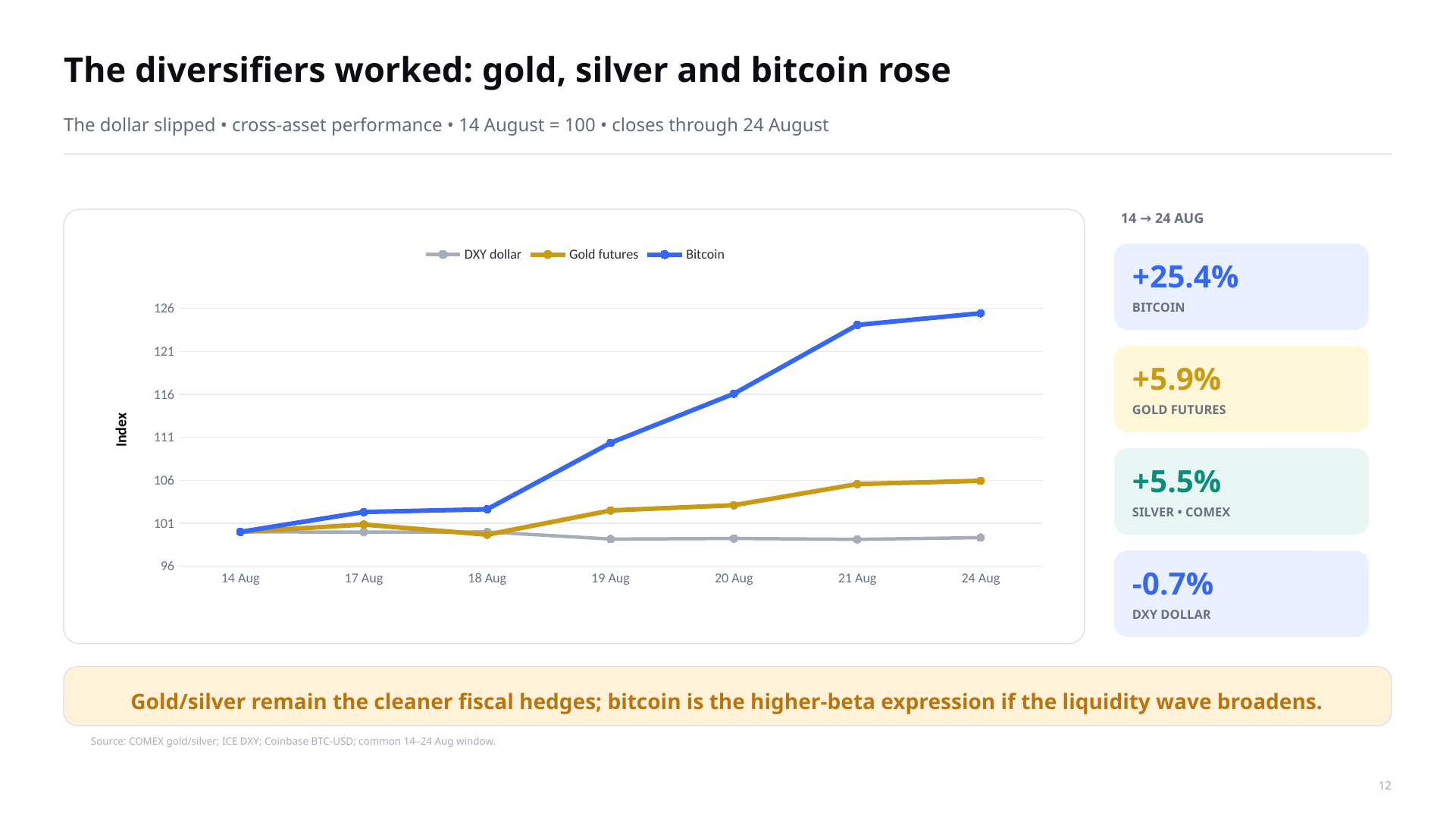
The call kept the core portfolio posture unchanged: retain inflation-sensitive diversifiers such as gold, silver, energy, managed futures and broad commodities; stay selective around expensive, duration-sensitive semiconductor exposure; and use equal-weight equity exposure if rotation continues.
Broader beta only becomes more attractive after a real liquidity injection is visible. Until the TGA falls without replacement issuance and the confirmation appears in reserves, yields and breadth, the disciplined response is to keep the diversifiers, remain cautious on concentrated semiconductors and wait for Treasury to act rather than trade the leak.
 Enlarge figure ↗
Full session
Watch the full call
Continue the process