

Inside Alpha · Call summary · 12 August 2026
From ETF universe to portfolio construction — and a first look at Alpha OS
A practical route from fundamental narrative to investable shortlist, portfolio role and daily decision workflow.
Define the investable universe first
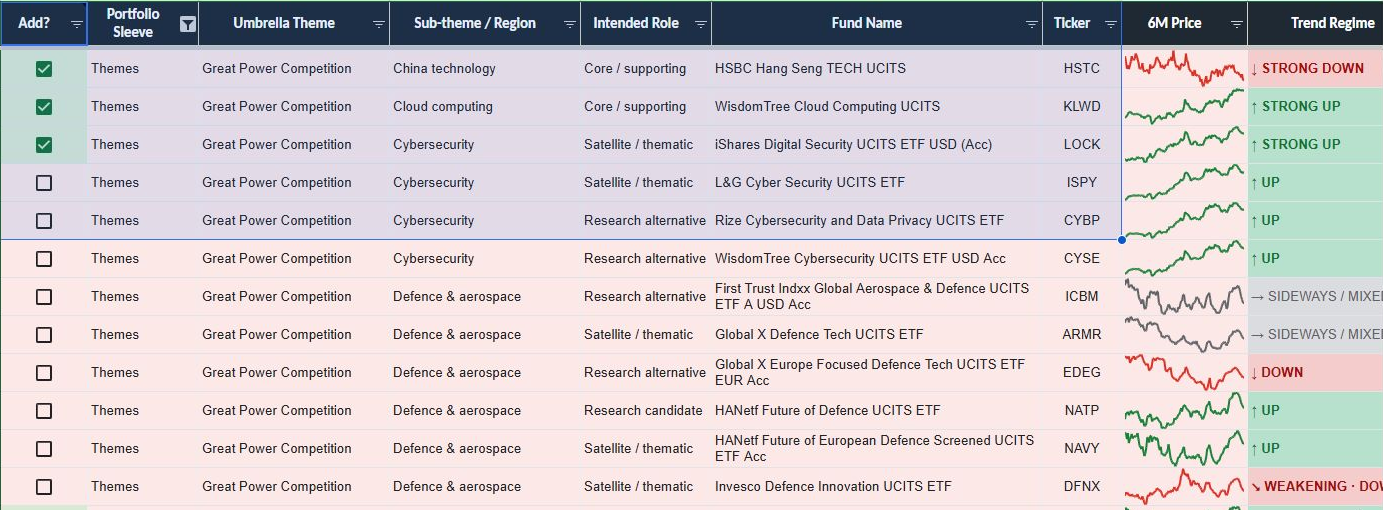
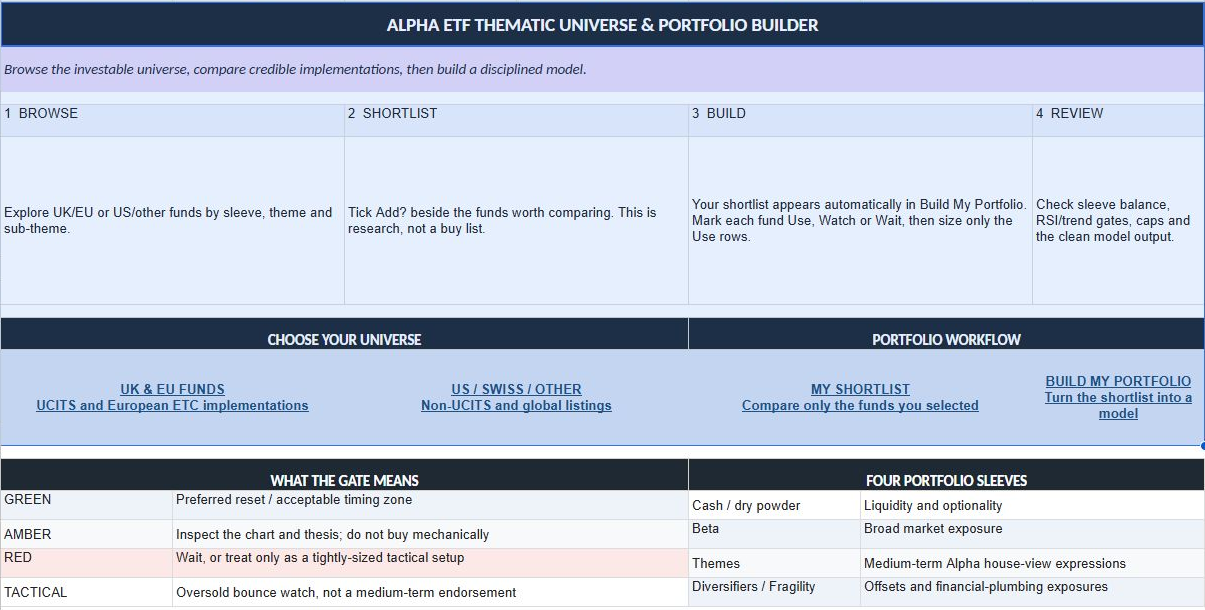
An investable idea is not the same thing as a portfolio position. The session began with the ETF master workflow: define the universe, organise exposures by portfolio role, shortlist the instruments that express the thesis and only then decide whether they deserve capital.
The four working sleeves have different jobs. Beta provides broad participation. Cash is dry powder and a risk-control tool. Diversifiers are intended to behave differently when the regime changes. Themes express medium-term investment narratives.
 Enlarge figure ↗
Diversification changes in an inflation selloff
A traditional balanced portfolio often assumes bonds will offset equity weakness. That relationship becomes less reliable when inflation pushes yields higher at the same time that equities fall, allowing bond and equity prices to decline together.
The framework therefore uses a broader Diversifiers sleeve instead of treating long-duration bonds as the automatic answer. Shorter parts of the curve, managed futures and commodity exposures can play different defensive roles when the source of the shock changes.
 Enlarge figure ↗
Start with fundamentals; use technicals as a nudge
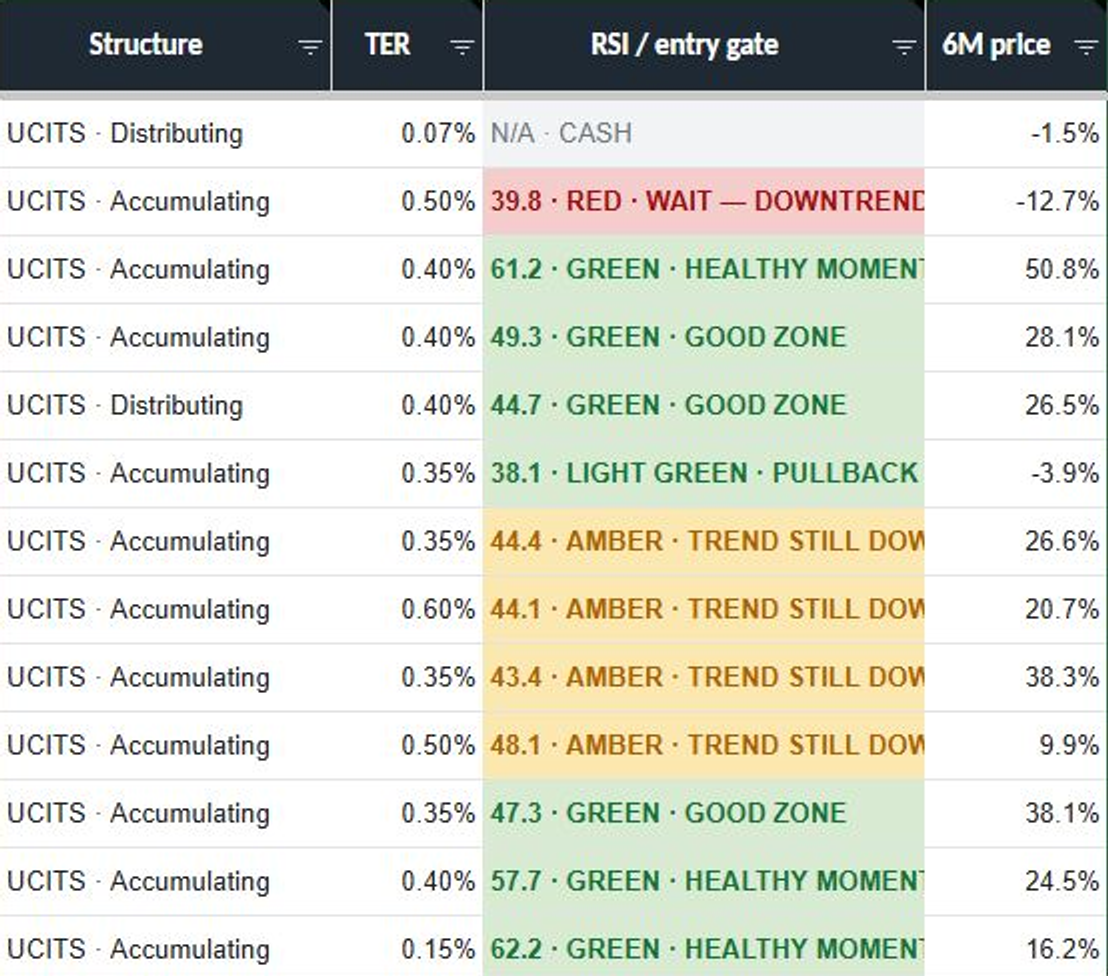
The workflow starts with the fundamental narrative and Alpha's themes and sub-themes, not with a random technical screen. Once the reason for owning an area is clear, the investable instruments can be narrowed and market structure used to refine expression and timing.
Trend and 14-day RSI are context, not commands. A very strong reading can warn against chasing an extended move; a weak reading can reveal an oversold situation worth investigating. Neither replaces the thesis, and a falling trend still matters.
 Enlarge figure ↗
Shortlist first, then build the portfolio
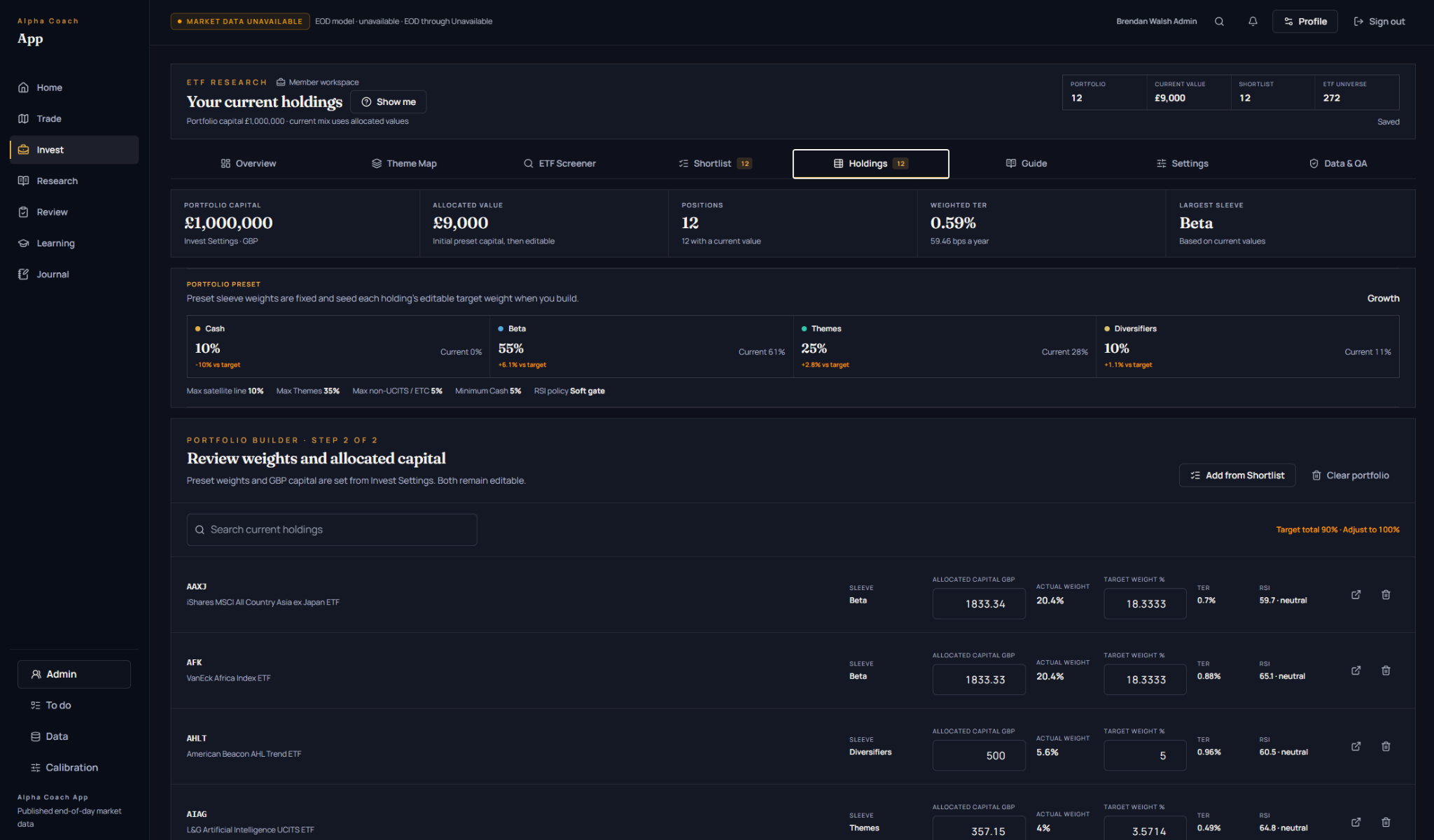
Shortlisted ETFs feed into portfolio construction only after idea selection. Every exposure still has to answer what role it plays, how large it should be, what it overlaps with and what happens to the rest of the portfolio if the thesis is wrong.
Time horizon is part of that discipline. A tactical setup, a medium-term theme and a strategic allocation should not be managed as though they are the same trade. Fundamentals dominate the longer-term case; technical structure can matter more for tactical entry and timing.
 Enlarge figure ↗
Alpha OS starts with context, not activity
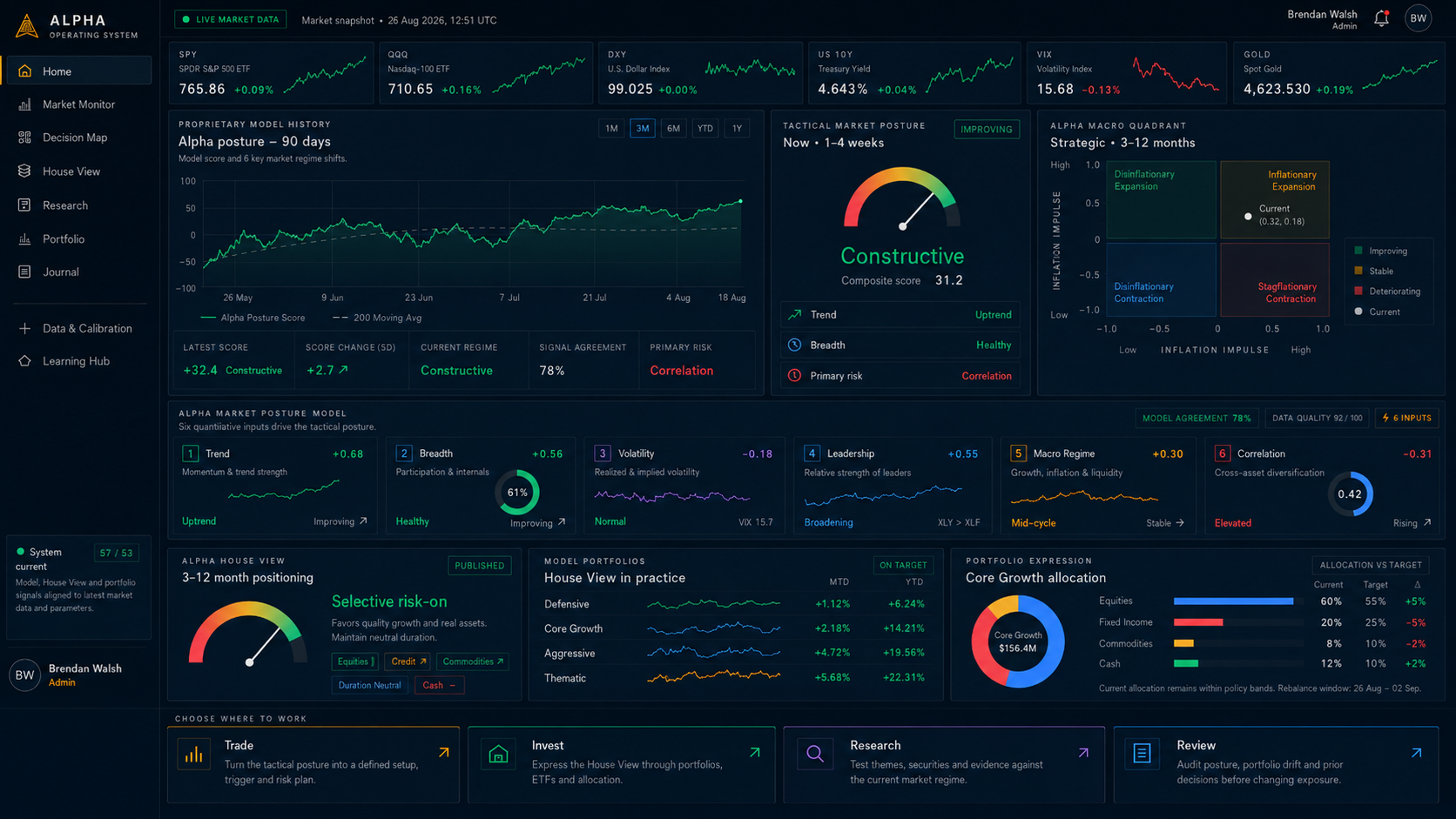
The second half of the session introduced Alpha OS as a daily operating system for investment decisions. The starting point is market context: trend, volatility, equity-bond correlation, breadth, leadership and macro regime combine into a view of market posture before the user decides what deserves attention.
From there, Trade, Review, Research and Learn are all legitimate paths. A user can structure a tactical idea, review an existing position, revisit Alpha's current and historical work, or close a knowledge gap before taking risk. Choosing not to trade is a valid decision when the evidence is incomplete.
 Enlarge figure ↗
Learning should close a gap before risk is taken
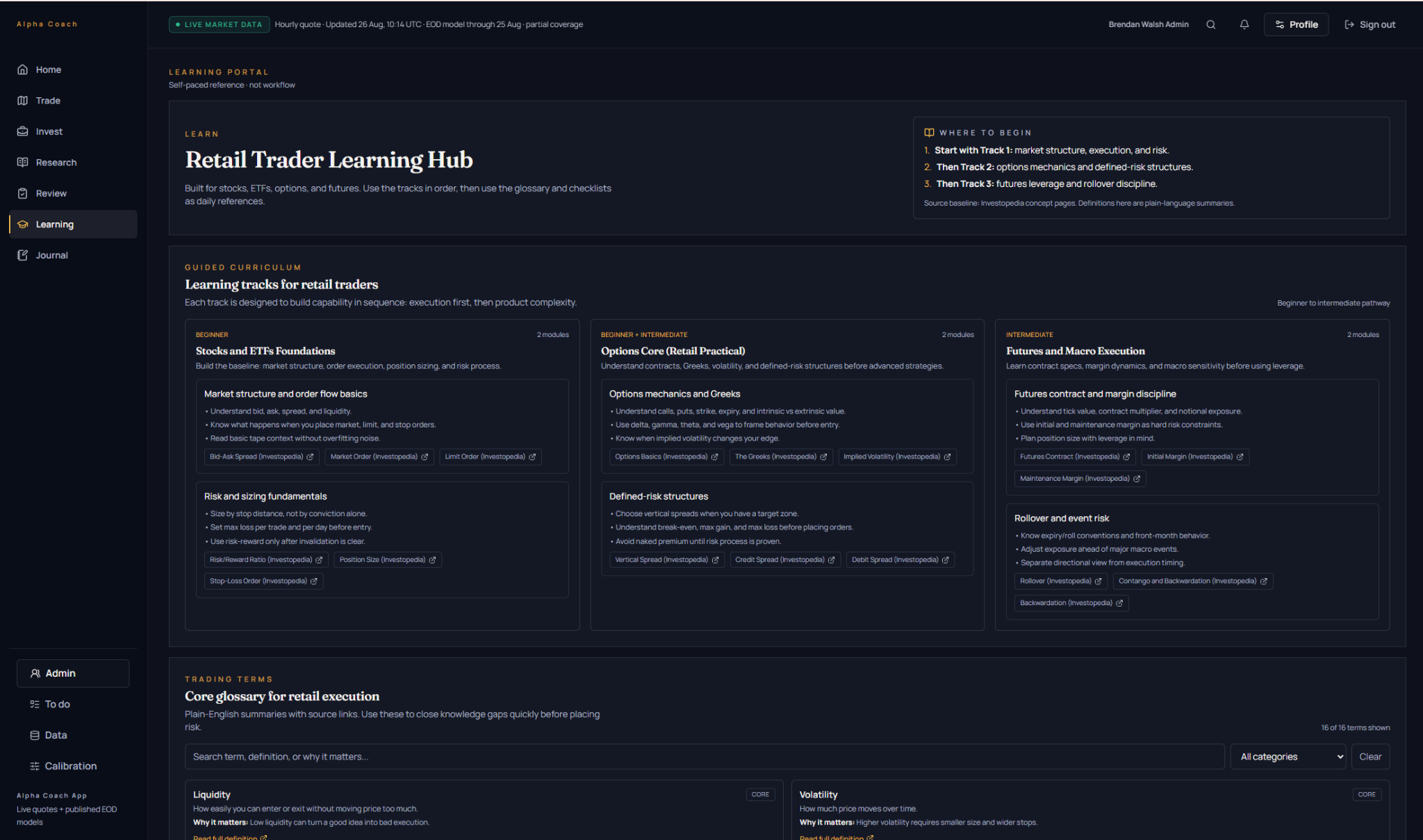
The Learning Hub was shown as a practical reference library for ETF foundations, risk sizing, options mechanics and Greeks, futures and macro concepts. Its role is not to turn Alpha into a course platform; it exists so a user can resolve the specific knowledge constraint blocking a sound decision.
 Enlarge figure ↗
Commodities: a theme, not an invitation to chase
Agriculture, energy logistics, food-supply disruption and low European river levels were discussed as parts of a longer-term commodity theme. The preference was for diversified medium-term exposure rather than tactical attempts to chase individual soft commodities, which can be highly technical and vulnerable to substitution effects.
The bottom line joined the full workflow: start with the narrative, define the universe, use technical information as context, assign a portfolio role and size, separate the horizons, check market context and research rather than trade when conviction is incomplete.
Full session
Watch the full call
Continue the process